
Editors’s note: Well, no DeFi post because I can’t stop thinking about AI agents. More changes to come but still figuring them out - Chris
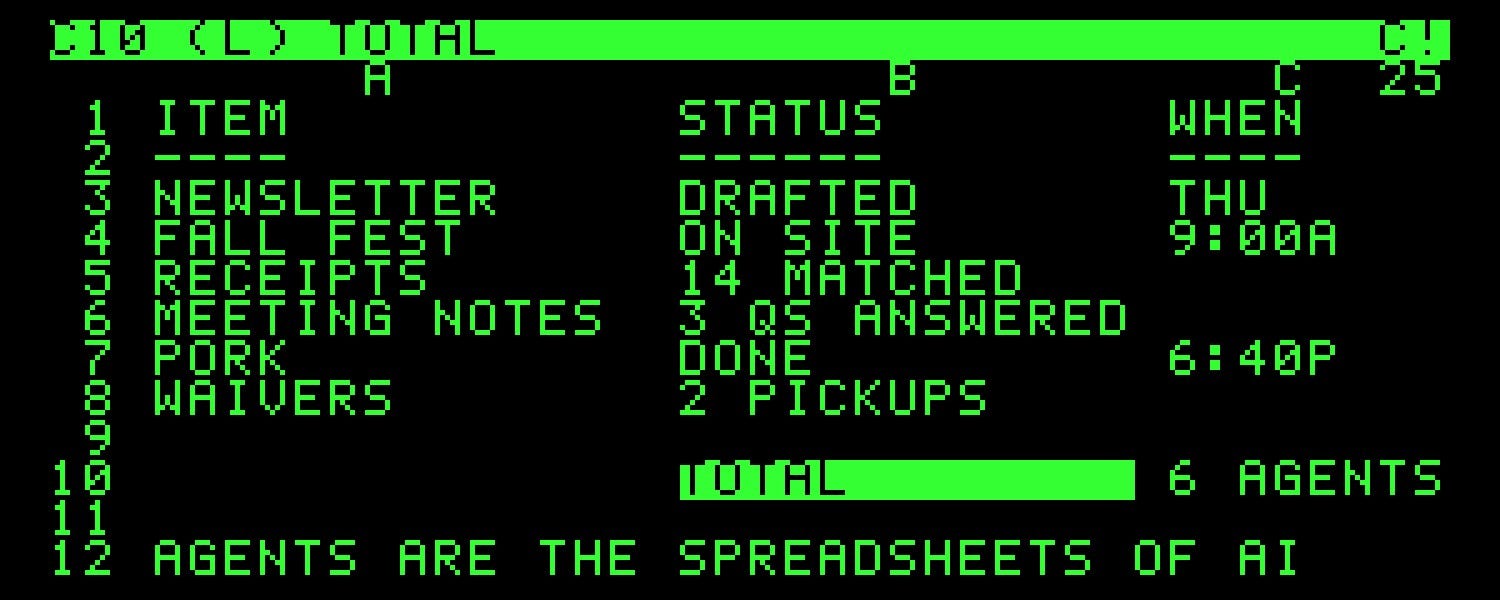
The agentic future is here, but the conversation seems stuck between two extremes: swarms of agents for developers and personal assistants for consumers.
These are the correct targets if you divide users into pre-AI market segments. But winners in new technology cycles win on the users they create.
The personal computer offers a history. Early personal computers appealed to hobbyists, but that was a small market. Everything changed with the spreadsheet because it opened up computing to a new user: business owners.
The same is happening with agents. Like spreadsheets, they turn non-programmers into programmers. Every organization now has an Excel wizard, soon we will have agent trainers that are just technical enough to let AI guide them through a customized software implementation.
There may be fewer agent trainers than users of personal assistants. Their individual software projects are much less complex than those built by professional developers. But taken together, agent trainers may have the largest impact.
The first killer app
The Apple II launched in 1977 as part of the first wave of personal computers. The market was small, and no one could figure out what to use computers for besides programming. That changed with the release of VisiCalc, the world’s first spreadsheet application, in 1979. The value and impact of VisiCalc were immediately recognizable by small business owners, who saw how they could manage inventory, handle accounting and organize business records.
Many folks bought a $2000 Apple II Computer (equivalent to $9,000 in today’s dollars) so that they could run VisiCalc. Steve Jobs even said Visicalc is “what really drove — propelled — the Apple II to the success it achieved.”
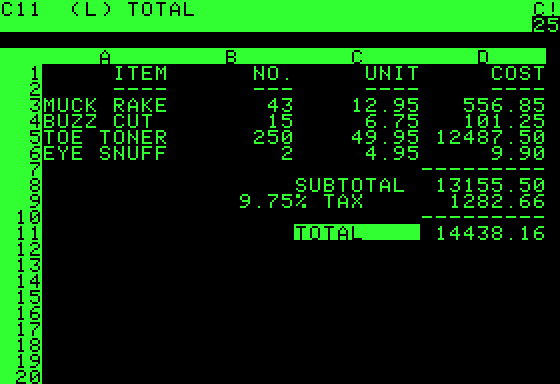
Why was VisiCalc so successful?
Because it greatly expanded the number of computer programmers. The formulas to sum, add, subtract, multiply, divide, find and perform other operations allowed non-programmers to get the value of the personal computer just as the hobbyists did. VisiCalc enabled files to become living documents for small organizations.
VisiCalc Crawled, so Excel Could Run
VisiCalc did not survive but the spreadsheet thrived and has remained the largest programming interface in the world for forty years. Nearly every small business relies on spreadsheets in some form, and almost all have a particular individual who is an “Excel wizard” because they have mastered formulas, pivot tables and maybe even macros. Excel wizards build spreadsheets that are customized to a particular business or department’s workflow.
They are not software developers but they do unlock the power and capabilities of computers. Excel wizards cannot have the singular impact of developers but they will have more impact in the aggregate. Why?
Because there is a whole lot of them.
Reasoning by analogy in the Age of AI
I see an obvious parallel between Excel wizards and the rise of coding agents. Last year’s advances in coding agents have opened up the software development market to millions more users to tinker and deploy. This new market segment — AI agent trainers — will unlock tiny amounts of value a million times over.
Agent trainers use AI not just to book a flight or cancel a subscription but to build simple customized software for a very specific use case, be it for personal or business use. These agent trainers know what data to feed an agent to make it knowledgeable. They know how to hook up a Github account, a Supabase database or Vercel to an agent.
Do they know how those work? Not exactly, but they are willing to let an AI bridge the gap and configure a DNS record, launch a droplet or copy and paste into a computer terminal.
What matters most is agent trainers’ understanding of the unique needs of an organization or team and the courage and patience to figure it out with AI’s help.
From my spreadsheets to my agents
I myself was an Excel wizard. I honed my craft doing consulting for financial institutions in China (I still remember discovering INDEX/MATCH, which is far far superior to VLOOKUP). Soon I was using spreadsheets to track my daily expenses, split roommate costs and search for an edge in fantasy sports. Excel wizardry skills were always something I brought to a new job, a new organization or my own personal productivity.
These days, I’m all in on AI agents. I’m working on:
A communications agent for a nonprofit that lets authorized users update the website, create meeting agendas from previous meetings and incoming requests, and send beautifully formatted newsletters.
An accounting agent for a nonprofit that manages receipts for reimbursement management and organizes donations and purchases through Zeffy and Stripe.
Agent Smoke, which estimates finish times for my pulled pork based on my past smokes and data from my FireBoard thermometers.
A fantasy baseball and basketball manager (and soon commissioner) that tailors advice to my preferences and published rankings, including whether I should use my limited waiver wire pickups this week or save for next.
A private finance agent that categorizes and tracks our family finances using a local model (Qwen 3.6) on my Mac Mini.
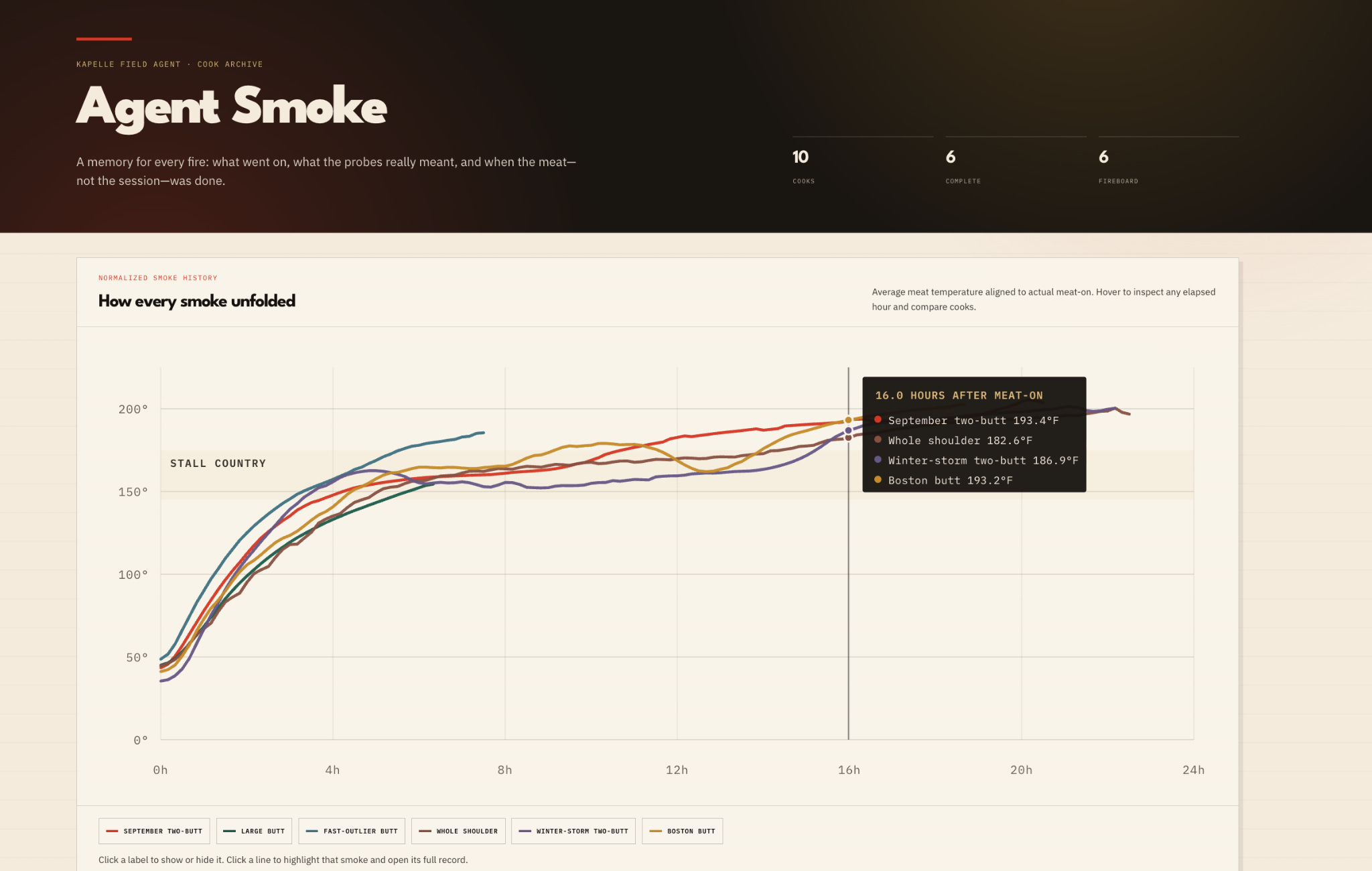
These examples are not simply using an LLM to vibecode an app. They are agents that process inputs for you using specific skills they’ve been trained with, and unlike apps, agents can improve themselves. You could always upgrade a UI and integrate something new. You really can build the plane while flying it.
What comes next?
There will be a lot more agents than even the biggest optimists predict. The most creative ideas of implementing AI will be through the agent medium, just as mobile businesses were built through the app store and internet businesses through websites. The sheer number of regular people building with agents will produce the most innovation.
Agent swarms and personal assistants will continue to grow, but the next big unlock is multiplayer mode — simple agents that can be used by a small team to manage a workflow. Shared files and shared context will make agents more social, but they’ll need local knowledge and last-mile integrations to be effective.
This is where agent trainers excel.
What will agent trainers of the future use to build their fleet? How will they manage storage and compute? What small businesses will be built by the best agent trainers?
What agents are you training? Comment below.
Chris Powers has written about China Finance, DeFi and now is writing about and training AI agents. Check out Kapelle.ai and caneyfork.co for more.